I turn AI into products people love, and results businesses can measure.

I pair AI capability with behavioral-design product sense to build products people actually return to, and the smart workflows that supercharge teams to ship them.

Introduced 76% of a live game engine's hooks · simulation-driven balancing that cut QA load · built the AI skill platform my whole team ran on.

0 contributions in the last year · 600 PRs, 563 merged in ~7 months

LessMore
Ben Young Ben Young
Ben presenting a phone showing his daily operating brief

A tool I built

Your business, one screen.

Every signal, woven together.

Live KPIs, read at a glance.

Focus on what matters.

Automatic every morning.

I build tools like this. With AI.

Case studies

‹ swipe to browse ›

Built with AI, crafted by human judgment.

One example of building creatively with AI: thinking out loud, directing a set of agents, iterating toward something good. The point isn't that AI made it. It's the work around it: framing the problem, building the harness, curating the inputs, and the human judgment that decides what's worth shipping.

The problem

Raise awareness of what I can do with AI, in a way that proves the capability instead of just claiming it. Most portfolios describe the work. I wanted the artifact itself to be the evidence, so I built this site by dogfooding the exact workflow. The recipient of this case study is me.

The method

01 / frame

Frame the problem

Before a model runs, the real work is understanding the goal, the business, and the constraints, then designing the harness the agents operate inside.

02 / direct

Direct, out loud

I think through ideas with my voice, steer a set of agents, and curate the source material they work from, iterating as it takes shape.

03 / judge

Judge the output

Models generate; judgment decides. Taste, behavioral-design sense, and hard editing turn raw output into something worth shipping.

The proof

Under the hood The toolchain behind this page, wired together with MCP and a push-to-deploy pipeline.

Claude CodeAnthropic · agent orchestration
CodexOpenAI · computer-use automation
HiggsfieldSoul + Seedance · image & video
Wispr Flowvoice dictation
Cartesia + ElevenLabsvoice cloning (Cartesia in use)
GitHubversion control · powers the ticker
Cloudflare Pageshosting · push-to-deploy
Hand-coded canvasthe live neural field is real JS, not generated

Watch it being built Live commit log from this site's own repo. Every entry shipped a change to this page.

    Guess what this site cost Human time, credits, domain, hosting. One real number, recomputed every deploy.

    Most of it is human judgment, not compute. Take a guess at the total so far:

    $

    I built Sworkit. Now I'm on the board bringing it into the AI era.

    Proof I operate this, not just advise on it.

    The problem

    Every company built before this AI wave faces the same question: adapt or fade. Sworkit is one I know from the inside, because I co-founded it. A fitness product that scaled past 30 million downloads now has to rethink how it builds, ships, and competes in an AI world.

    The method

    I sit on the board, and I bring the AI work back to the team: what's real, what's hype, and where it actually moves the product. The team ships; I keep them at the front of the curve. The same operator instinct that built the company, now pointed at the transition.

    The proof

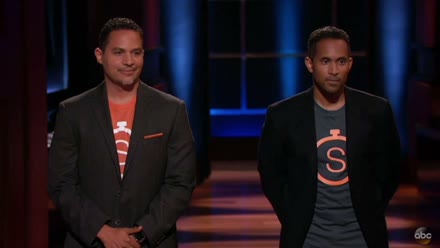
    Not theory. I co-founded Sworkit, grew it past 30M downloads and millions in revenue, raised venture funding, and pitched it on Shark Tank in 2016, where we earned a deal on air. The company is thriving today, and I'm still on the board, now helping it adapt to AI.

    Sworkit on Shark Tank, 2016, recut with AI. Watch the full pitch →

    I replaced a daily scramble across a dozen tools with one trusted brief.

    An AI system I built and run for my own role. The same pattern works for any team drowning in information.

    The problem

    Every operator starts the day the same way: open analytics, scan team chat, check tickets and pull requests, glance at three dashboards, then try to work out what actually needs attention. The signal is real but buried, the ritual is slow, and you are never quite sure you saw the one thing that mattered.

    The method

    I built a single morning brief that does the scramble for me, automatically, before I wake up. It runs on an always-on machine, pulls from the systems that drive my role, and produces one focused page wired into my personal knowledge graph. Where there was no API, I pointed a computer-use agent at the tools and had it operate them the way a person would. A self-correcting quality loop checks its own data pulls and rewrites weak sections until the output earns trust.

    The proof

    It is live. Every claim links back to its source, past briefs are linked so I can read the trend, and it reads cleanly on my phone. Trust was the deliverable, not the demo. This is exactly the kind of system I would stand up for a portfolio company in its first weeks.

    See it live, the way I read it every morning ↑

    I architected the combat engine of a live auto-battler, and the tooling that balances it on data.

    The role where my product sense and AI leverage compounded into a superpower. I think like a product and UX designer, not just an engineer, and pairing that behavioral-design instinct with AI let me prototype, design, and ship game systems at a pace that normally takes a team.

    The problem

    Shiba Story Go is a live auto-battler built AI-forward, prototyping and shipping mechanics faster than a traditional studio. The hard part: move that fast without the game becoming spaghetti, while the combat stays deterministic (client and server run bit-identical seeded simulations, verified by per-command hashing) and still feels snappy, reactive, and worth replaying.

    The method

    I expanded the engine that game designers author content in as data, not code: I added 92 of its 121 skill functions and most lifecycle events, including an interception model that lets a buff reach into the middle of a hit to guard, revive, retarget, or rewrite it, with no engine change. On top I designed the systems players feel: the 8-Expertise roguelike meta, the elemental damage model, raids, mounts, and gear. I shipped over 500 PRs in roughly seven months.

    The proof

    Because the simulation is reproducible, I built BalanceLab: a what-if simulator that mutates game data or a real player roster, runs the actual combat across thousands of seeds, and auto-tunes a lever to a target win-rate band. A balance pass that meant days of manual playtesting became an overnight batch. It is in production, and it cut QA load dramatically.

    Players validate it: Shiba Story Go holds 4.72 stars across 167 App Store ratings, with reviews calling the game design “best in class.”

    Live gameplay from Shiba Story Go, the title whose combat engine and balancing toolchain I built. It is live now, play it at shibastorygo.com ↗

    I gave my whole team a shared operating system of AI skills.

    AI leverage captured once and distributed to everyone, not siloed in one power user.

    The problem

    The best AI workflows lived in one person's head: a rigorous build-and-review loop, reports that read live business data, a combat balance simulator. Everyone else reinvented them, used weaker versions, or pasted so much context into one session that the model lost the thread.

    The method

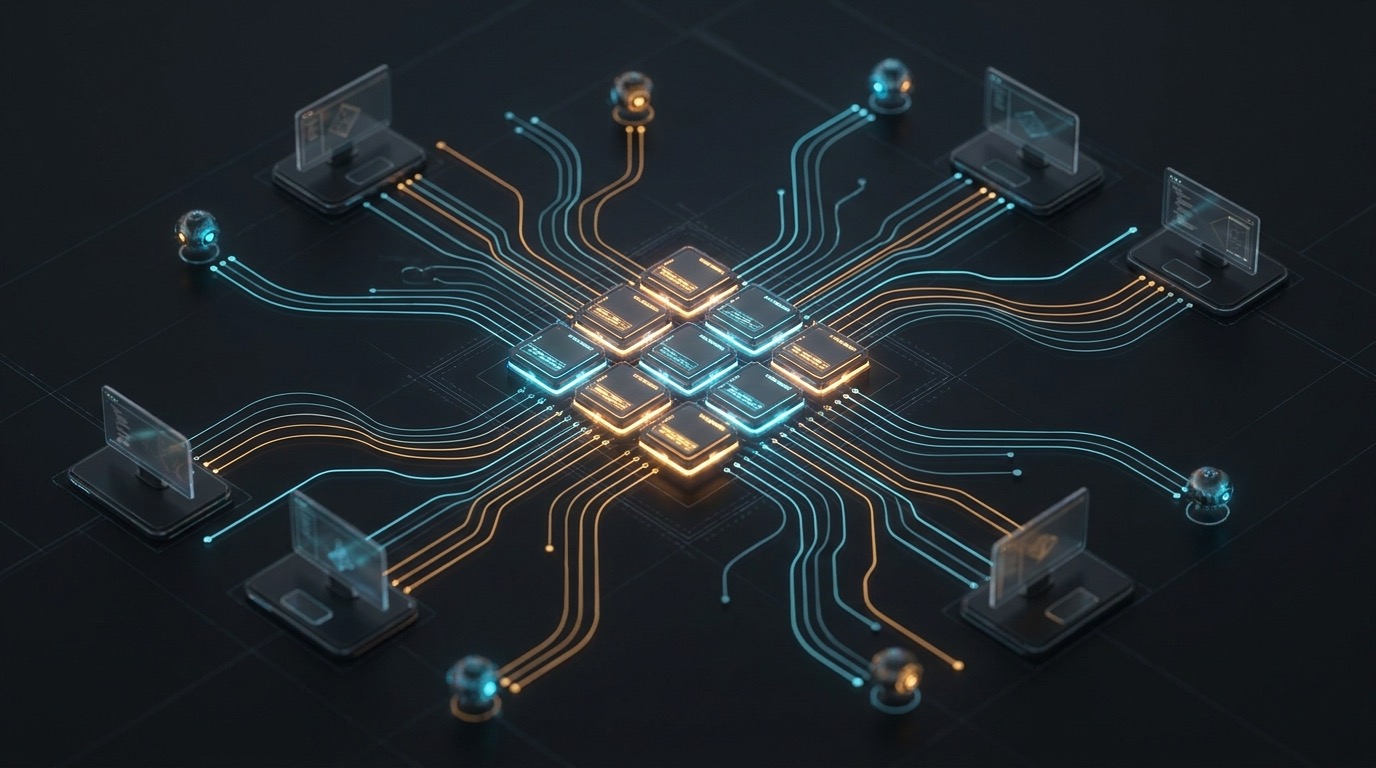
    I built a Claude Code plugin marketplace: around 30 agentic skills across four suites (dev loop, live-data reports, game-design tooling, comms). Each engineer installs only what they need, so context windows stay clean and every workflow runs identically. The /dev skill alone walks a task from clarify to a triaged PR.

    The proof

    It was adopted across the engineering org: faster loops, fewer regressions, and reports that became one command instead of manual analyst work. AI leverage stopped being one person's superpower and became the team's. The transferable capability, a shared AI operating model, is exactly what I would stand up for a portfolio company.

    A modular grid of glowing skill plugins wired out to every engineer's workstation

    I owned a revenue-generating game, and built the tooling that let two people run it.

    Product ownership plus leverage: solve the bottleneck in tooling, and a tiny team runs a real product.

    The problem

    Proof of Play spun its flagship IP, Pirate Nation, into a lean web3 arcade product on the Abstract chain. It only worked if a very small team could run it. The bottleneck was content: the game's data lived in an intractable EAV schema, thousands of scattered rows, impossible to balance by hand.

    The method

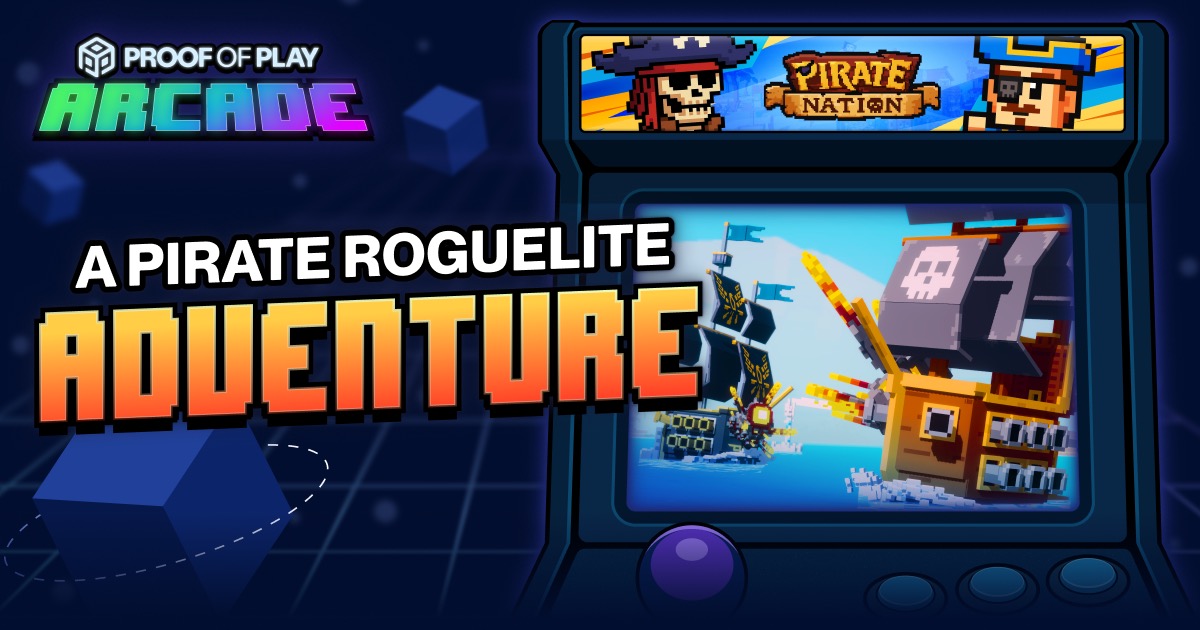
    I designed the cards, enemies, decks, and waves, and built the tooling to run them: the PN Arcade Manager parses the raw schema into clean, balanceable structures and lets you inspect cards, decks, waves, drop odds, and reward payouts directly. AI is what turned a near-unqueryable schema into shippable content.

    The proof

    Run by two people, the Arcade generated roughly half a million dollars in its first few months. Not the headline number, the shape: a real revenue product owned and operated by a team small enough to fit in a sentence, because the unglamorous work was solved once in tooling.

    The PN Arcade Manager I built to author and balance the game, in my own voice.
    And the game itself, attract-mode gameplay from Pirate Nation Arcade.

    I ran out of disk space, so I shipped a paid app to curate a lifetime of photos.

    Problem-first product thinking: a personal pain, turned into a live product in weeks.

    The problem

    I ran out of space on a 2TB laptop. A decade of photos and video was scattered across my phone, desktop, and several drives, thick with duplicates and forgotten moments, and Apple Photos only manages what is inside Apple Photos. Nothing curated media across drives, folders, and iCloud at once.

    The method

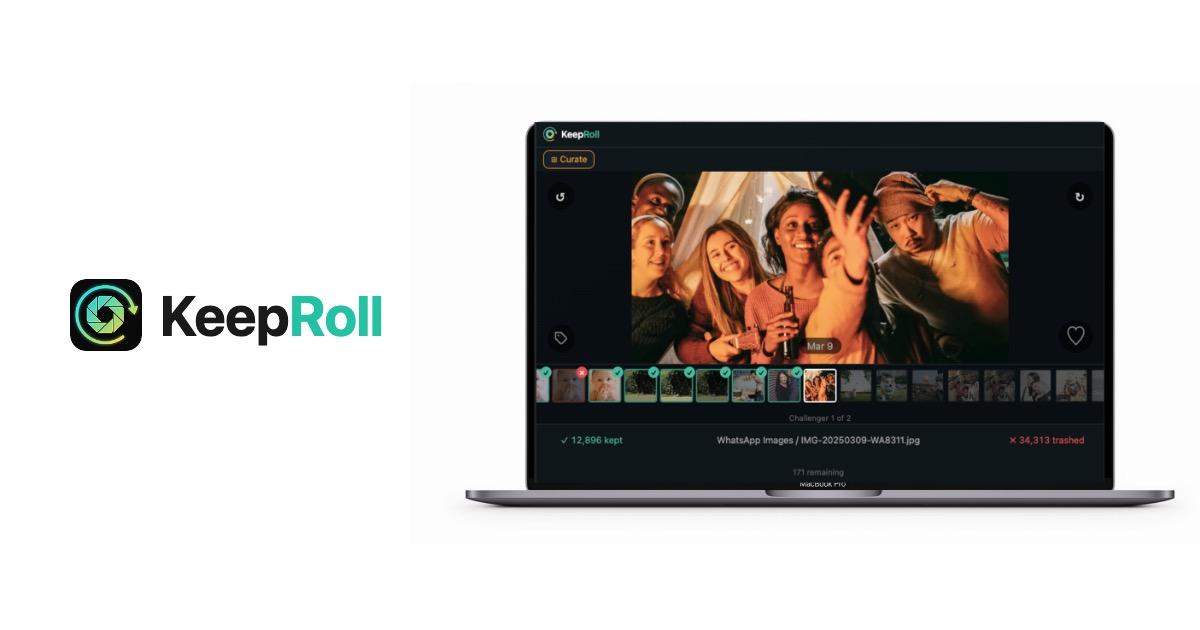
    I built KeepRoll: a local-first Mac app to swipe keep-or-trash across every source. Perceptual-hash clustering surfaces the best of a burst, share links let others help curate, and keepers sync back to the phone. Deliberately lightweight, Python standard library, no framework, no build step, solo with AI.

    The proof

    It is a live, paid product at keeproll.app, built from a standing start in roughly 17 days across 239 commits. Design, packaging, a marketing site, and checkout, all the way to a paying customer. The clearest example of turning a “what if I could” into a shipped system.

    KeepRoll curating a photo library across sources

    An AI coach that learns your voice and speaks back to you, as you.

    A multimodal AI product: Claude, Whisper, and voice-cloning in a real-time loop.

    The problem

    There is real power in hearing your own voice. I had been recording affirmations and playing them back, and it lands in a way another narrator never does. The question: could a coach speak to you in your own voice, reminding you who you are trying to be and the wins you have already had?

    The method

    I prototyped Inner Voice: it interviews you about your goals and clones your voice while you answer, so the clone is a byproduct of a conversation you would want anyway. Then a real-time loop: Whisper transcribes, Claude coaches, a clone of your voice replies, all on a React Native and FastAPI stack.

    The proof

    A working prototype: 62 commits in ~3 weeks, the full multimodal loop running across three AI systems. Not shipped, but proof I can take a non-obvious product idea and stand up the whole stack behind it. A demo is in progress.

    Line-art head with voice waves curving back to the ear

    Browse case studies

    About

    Behavioral-design product sense, applied to AI.

    I have built products through every layer of how they get made. The engineer writing the code, the product lead deciding what to build, the founder carrying the business. AI did not pull me out of building. It pulled me back in.

    What ties it together is behavioral design. Every product I have shipped is a bet on human behavior: what makes someone come back, form a habit, trust a tool. Sworkit was habit formation. The game systems were engagement and retention. The crypto economies I designed were incentive systems. Inner Voice is behavior change you can talk to. I bring that same lens to AI, because the hard part was never the model. It was designing the behavior around it.

    Now I want to build behavior-shaping, AI-native products, and help teams adopt AI as an operating model rather than a novelty. At Proof of Play I did exactly that for an eleven-engineer team. I am looking for the next place to do it, in product, solutions architecture, or AI enablement.

    BS, Computer Science · University of Virginia    MBA · The Wharton School, University of Pennsylvania

    What they say

    Building at AI speed
    “Ben is the clearest glimpse I have had of where product is going. Powered by AI, he shows up with the feature already built, already working, already in your hands. If you want to see the future of product, hire Ben.”
    Matt VanCTO, Proof of Play
    Team AI enablement
    “He created the team’s entire combat simulation framework and churned out dozens of shared AI skills to automate data tedium. Any team that has Ben should consider themselves lucky, because he will accelerate everyone around him tenfold.”
    Phillip ChungDesign Lead, Proof of Play
    Product ownership
    “He aggressively set up AI environments to prototype and deliver on his ideas for new and improved features. It inspired me to be more bold in my own self-directed product ownership.”
    Grant ArundellLead Unity Programmer, Proof of Play
    Engineering rigor
    “He built experimental test rigs, worked through the math and levelling, and built extensive unit tests for everything he did. I could rely on him having done his homework. Would love to work with him again.”
    Benjamin CooleyPrincipal Engineer, Proof of Play
    Game design
    “Ben brings a rare combination of genuine creativity and an optimism that’s hard not to feed off of. He’s the kind of person who makes the brainstorming process exciting.”
    Daniel NavarroQA Analyst, Proof of Play

    Contact

    Let's put AI to work where it counts.

    Open to consulting, fractional, and full-time work where AI meets product.

    I usually reply within a day.